Honeycomb Shades Northern Kentucky | Energy-Efficient Window Coverings
Your Duke Energy Kentucky bill tells the story every month: Northern Kentucky’s humid 90°F summers and bitter winter cold fronts force your HVAC system into overdrive. If you live in Florence, Fort Mitchell, Edgewood, or Independence, you already know that standard blinds do almost nothing to stop heat transfer through your windows. That’s where honeycomb shades change the equation for Northern Kentucky homeowners seeking real energy savings without sacrificing style.
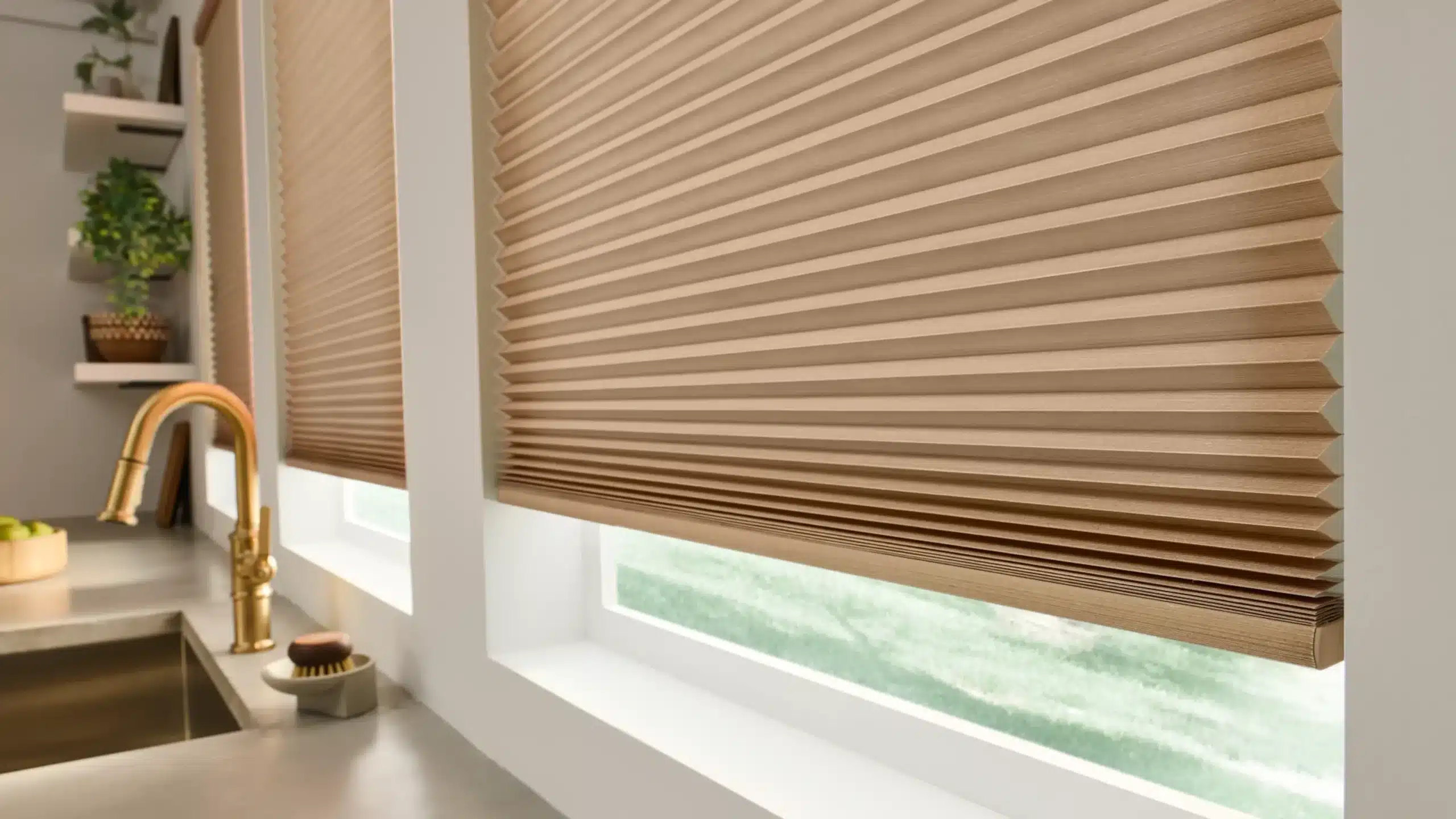
Unlike flat blinds or basic curtains, honeycomb cellular shades trap air in hexagonal pockets that create a thermal barrier between your home and the outside elements. For ranch homes with large picture windows or split-levels with sun-drenched upper floors, this insulation technology directly addresses the climate challenges unique to the Greater Cincinnati region.
Why Northern Kentucky’s Climate Demands Better Window Insulation
Living near the Cincinnati/Northern Kentucky International Airport corridor means experiencing dramatic temperature swings—sometimes 40°F differences within a single week. The U.S. Department of Energy reports that 25-30% of residential heating and cooling energy use is attributable to heat gain and loss through windows (Source: U.S. Department of Energy, Energy.gov Windows Overview, 2023). For Northern Kentucky homeowners paying Duke Energy Kentucky rates averaging $0.12 per kWh, that translates to hundreds of dollars annually escaping through inefficient window treatments.
Summer Heat Challenges in NKY Homes
July and August bring relentless humidity to Boone, Kenton, and Campbell counties. Your air conditioner battles solar heat gain from morning until night. Standard aluminum blinds absorb and radiate that heat directly into your living spaces. The National Fenestration Rating Council confirms that cellular shades can reduce unwanted solar heat gain by up to 80% when properly installed (Source: National Fenestration Rating Council, NFRC Technical Documentation, 2022). That means your Independence ranch home or Edgewood split-level stays cooler without your AC running constantly.
Winter Cold and Drafty Windows
When temperatures drop into the 20s near Newport on the Levee and throughout Covington’s historic districts, single-pane windows and older double-pane units become thermal weak points. According to ENERGY STAR, upgrading to insulating window treatments can save homeowners $125-465 annually on heating and cooling costs (Source: ENERGY STAR, Window Attachment Savings Calculator, 2023). Honeycomb blinds in Covington’s older brick homes provide an affordable alternative to full window replacement while delivering measurable insulation improvements.
How Honeycomb Cellular Technology Actually Works
The science behind cellular shades Florence KY homeowners love is elegantly simple. Each shade consists of honeycomb-shaped cells—typically single, double, or triple layers—that trap dead air. Dead air is one of nature’s best insulators because it doesn’t circulate or transfer temperature efficiently.
Technical insight: Double-cell honeycomb shades achieve R-values between 3.0 and 5.0, compared to R-values of less than 1.0 for standard blinds. The higher the R-value, the better your window resists heat transfer in both summer and winter conditions.
Cell Size Options for Different Window Types
Northern Kentucky’s architectural diversity—from compact Florence townhomes to sprawling Fort Mitchell estates—requires flexible sizing options:
- 3/8″ cells: Ideal for smaller windows and doors; provides clean proportions for ranch home casement windows
- 3/4″ cells: The most popular choice for standard bedroom and living room windows throughout NKY
- 1-1/4″ cells: Best for large picture windows and sliding glass doors common in newer Independence construction
Light Control and Privacy Features
You don’t have to sacrifice natural light for energy efficiency. Today’s honeycomb shades offer multiple opacity levels:
- Sheer fabrics filter harsh sunlight while maintaining your view of the rolling Kentucky hills
- Light-filtering options provide daytime privacy without darkening your rooms
- Room-darkening materials block 99% of light for bedrooms and media rooms
- Blackout cellular shades combine maximum light blocking with superior insulation
Energy Savings Breakdown for NKY Homeowners
Let’s translate insulation technology into Duke Energy Kentucky bill savings. The numbers below reflect realistic expectations for Northern Kentucky’s climate zone (IECC Zone 4A):
| Home Type | Estimated Annual Savings | Typical Payback Period |
|---|---|---|
| 1,500 sq ft Ranch (Florence) | $180-$280 | 2.5-3.5 years |
| 2,000 sq ft Split-Level (Edgewood) | $240-$360 | 2-3 years |
| 2,500 sq ft Two-Story (Fort Mitchell) | $300-$450 | 2-3 years |
| 3,000+ sq ft New Construction (Independence) | $350-$520 | 2.5-4 years |
These estimates assume whole-home installation with double-cell honeycomb shades. The Hunter Douglas Duette line, for example, has been independently tested to provide up to 40% improvement in window insulation performance compared to bare windows (Source: Hunter Douglas, Duette Honeycomb Shade Performance Data, 2023). Your actual savings depend on your home’s current insulation, window age, and thermostat habits.
Choosing the Right Honeycomb Shades for Your Northern Kentucky Home
Style matters as much as function when you’re investing in window treatments. Northern Kentucky’s hometown value culture means you want quality that lasts without overpaying for unnecessary luxury features.
Color and Texture Selection
The architectural mix across Boone, Kenton, and Campbell counties calls for versatile color palettes. Popular choices for Northern Kentucky homes include:
- Warm neutrals (cream, linen, soft gray) that complement both traditional ranch interiors and updated split-level renovations
- White and off-white tones that maximize light reflection and suit newer construction aesthetics in Independence subdivisions
- Deeper earth tones (slate, espresso, navy) for Covington’s historic homes where character matters
Operating Mechanisms to Consider
How you raise and lower your shades affects daily convenience and long-term durability. Your options include:
- Standard cord lift: Most affordable option; requires attention to child safety
- Cordless lift: Clean appearance and safer for homes with young children or pets
- Top-down/bottom-up: Allows privacy on the lower portion while letting light in from the top—perfect for street-facing windows in Florence neighborhoods
- Motorized operation: Programmable automation integrates with smart home systems; ideal for hard-to-reach windows in two-story Fort Mitchell homes
Professional Measurement vs. DIY
The American Home Furnishings Alliance reports that approximately 23% of DIY window treatment installations result in improper fit or function issues (Source: American Home Furnishings Alliance, Consumer Installation Survey, 2022). Northern Kentucky’s older homes often have windows that appear standard but feature slight deviations from modern sizing. Professional in-home measurement ensures your honeycomb shades fit precisely, eliminating light gaps that undermine both energy efficiency and appearance.
Ready to see how honeycomb shades will look in your home? Get a free in-home consultation with precise measurements and personalized style recommendations.
Why Northern Kentucky Homeowners Trust Local Window Treatment Expertise
Purchasing energy saving window treatments NKY families depend on requires more than clicking “add to cart” on a national website. Here’s what matters when choosing your provider:
Local Climate Knowledge
A window treatment consultant who understands Northern Kentucky’s specific heating and cooling patterns can recommend appropriate cell configurations. Homes near the Ohio River in Covington experience different humidity levels than hilltop properties in Fort Mitchell—and those differences affect which products perform best for your situation.
Installation Quality Guarantees
Proper installation determines whether you achieve the energy savings honeycomb shades promise. Look for providers offering written guarantees on both product and installation labor. Your investment in cellular shades Florence KY homes deserve should be protected by accountable local service.
Warranty Support
Major manufacturers like Hunter Douglas and Graber offer limited lifetime warranties—but those warranties require proper installation to remain valid. Working with an authorized local dealer ensures your warranty claims receive prompt attention without shipping delays or corporate runaround.
Don’t let another season of extreme temperatures drain your budget. Schedule your free in-home honeycomb shade consultation today and discover exactly how much you could save on your Duke Energy Kentucky bills.
Frequently Asked Questions About Honeycomb Shades
What’s the difference between single-cell and double-cell honeycomb shades?
Single-cell shades feature one layer of honeycomb pockets, providing moderate insulation suitable for newer windows with good existing efficiency. Double-cell shades stack two layers of air pockets, nearly doubling the R-value and making them the preferred choice for older Northern Kentucky homes where windows lack modern insulation coatings.
Can honeycomb shades be cleaned without damage?
Yes—most honeycomb fabrics respond well to light vacuuming with a brush attachment on low suction. For deeper cleaning, many manufacturers approve ultrasonic cleaning performed by professional drapery services. Avoid submerging cellular shades in water, which can damage the internal honeycomb structure and void warranties.
Do motorized honeycomb shades work with smart home systems?
Modern motorized cellular shades integrate with platforms including Amazon Alexa, Google Home, Apple HomeKit, and dedicated smart home hubs. You can program schedules that automatically lower shades during peak afternoon sun in summer or raise them to capture passive solar heat on winter mornings—maximizing your energy savings without daily manual adjustments.
Frequently Asked Questions
How long do honeycomb shades typically last in Northern Kentucky's climate?
Quality honeycomb shades from major manufacturers typically last 10-15 years with normal use. Northern Kentucky’s humidity doesn’t significantly impact modern synthetic fabrics, though homes without air conditioning may see slightly faster fabric fading from prolonged UV exposure. Motorized components carry separate warranties, usually 5-7 years.
Are honeycomb shades worth the cost compared to standard blinds?
When factoring in energy savings, honeycomb shades deliver positive ROI within 2-4 years for most Northern Kentucky homes. A $2,000 whole-home investment saving $350 annually pays for itself by year six while continuing to reduce bills for another decade. Standard aluminum blinds cost less upfront but provide virtually no insulation value.
Can honeycomb shades be installed on sliding glass doors?
Absolutely—vertical cellular shades and specialized sliding panel systems accommodate doors of any width. These products use the same insulating honeycomb technology in configurations designed for horizontal movement. They’re particularly popular for Independence and Florence homes with large patio access points facing afternoon sun.